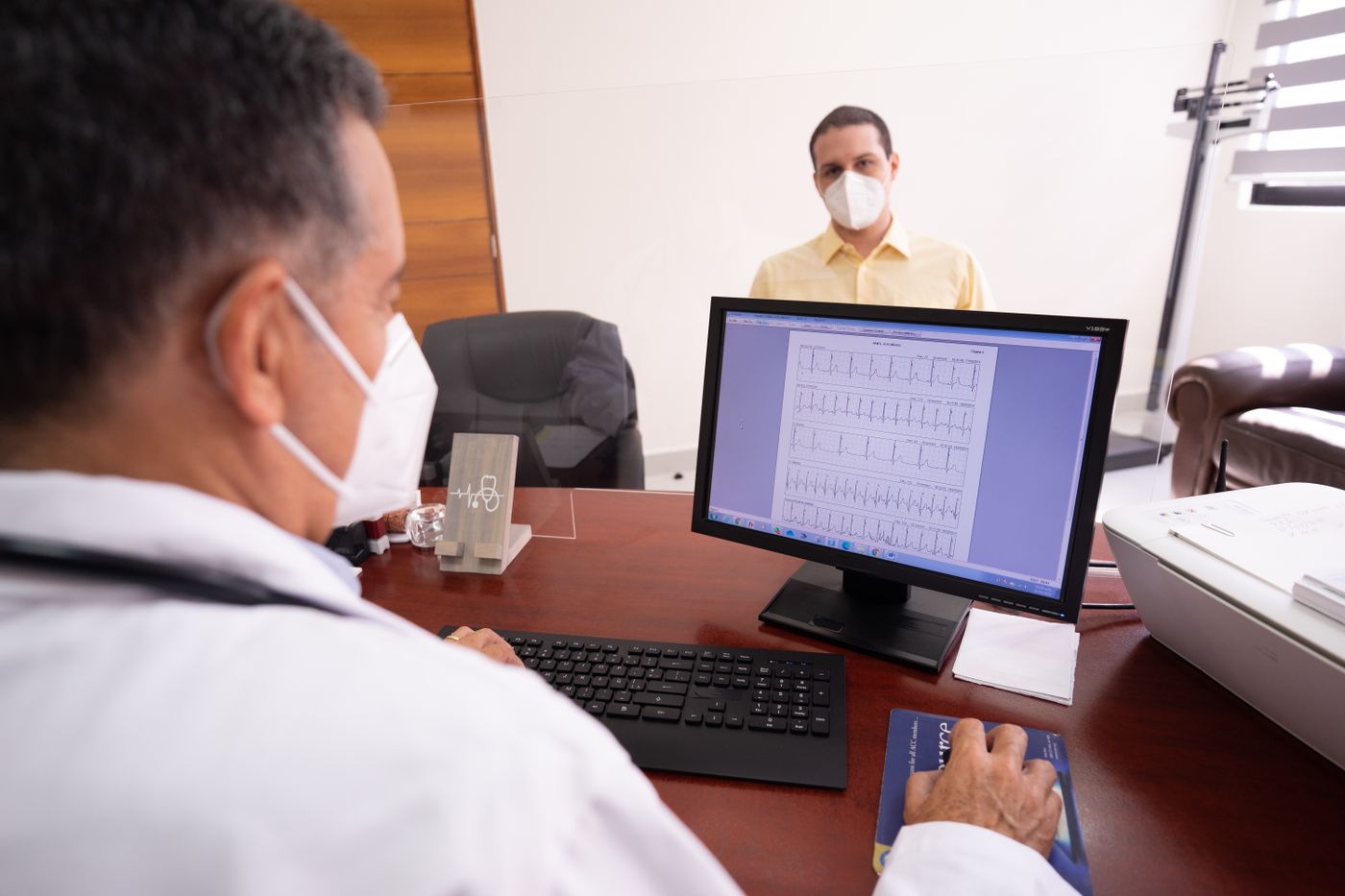
EHR consulting in Trenton runs into 42 CFR Part 2 immediately: substance use disorder records carry consent and disclosure rules that HIPAA alone does not. A consultant audits how the current configuration segments those records and rebuilds the disclosure path around them. Engagements run six to twelve weeks.
Why Trenton Practices Bring in EHR Consultants
Trenton practices operate under compliance and payer complexity that generic ambulatory EHR configurations were never designed for. Substance use disorder (SUD) records fall under 42 CFR Part 2 privacy law — more restrictive than HIPAA, with specific consent requirements for disclosure and hard rules about what information can flow to other providers. Payer mix runs heavy on managed Medicaid (Horizon NJ Health, Amerigroup, WellCare), Medicare, dual-eligibles, and self-pay, each with distinct authorization and eligibility workflow.
When the EHR treats SUD records like regular HIPAA-covered PHI, the practice carries audit and disclosure risk. When Medicaid managed-care authorization workflow lives in a spreadsheet outside the EHR, prior-auth denials pile up and revenue leaks. When dual HIPAA + 42 CFR Part 2 compliance requires manual attention on every SUD encounter, physicians spend time on privacy workflow instead of clinical work. Consulting is the intervention that reconciles the technology with both the compliance requirement and the payer reality.
Three Principles That Shape Every Trenton Engagement
Local, not remote-only. Mercer County engagements are on-site by default. Consultants reach Trenton in 55 minutes from our Hackensack HQ. 42 CFR Part 2 workflow observation requires sitting through the full SUD encounter arc — intake consent, encounter documentation, release-of-information handling — because a screen-share on the encounter template alone misses where the privacy workflow is actually breaking.
Specialty-fluent. Trenton’s medical mix skews toward safety-net primary care, behavioral health, substance use disorder treatment, and mixed-payer internal medicine — distinctly different from insurance-panel practices in other parts of NJ. Our consultants have optimized templates for the safety-net and behavioral health ambulatory profile, not a generic community-practice average.
Ties into the rest. EHR consulting slots into a broader stack. When the engagement surfaces adjacent needs, we can hand off cleanly to MIPS/MACRA advisory, workflow optimization, or full EHR administration without a second vendor introduction.
Ready to Talk?
30-minute assessment. No pitch.
Compliance Frameworks
Practice Profiles Where Consulting Is a Fit
EHR consulting is scoped work with a defined start and end. It fits practices with a specific pain point they want fixed — not a wholesale outsource. The profiles below are the ones we see most often across the 08608 area and greater Mercer County:
Behavioral health and substance use disorder practices. Practices providing SUD treatment where 42 CFR Part 2 record segregation, consent workflow, and audit-defensible disclosure logging need to be built into the EHR rather than bolted on.
Safety-net and Medicaid-heavy practices. Practices serving high proportions of managed Medicaid patients (Horizon NJ Health, Amerigroup, WellCare) whose prior-authorization and eligibility workflow needs to consolidate inside the EHR.
Mixed-payer internal medicine and family practices. Practices navigating dual-eligible, Medicare, Medicaid, and commercial patients where per-visit eligibility reconciliation is eating admin time.
Integrated behavioral health-primary care practices. Practices coordinating mental health, SUD, and primary care where documentation has to support integrated care while respecting distinct privacy requirements per record type.
How a Trenton Engagement Actually Runs
Discovery on-site. Half-day at your practice covering intake, consent workflow, encounter documentation, and release-of-information handling. Providers and administrative staff shadowed, payer-authorization workflow traced end-to-end, 42 CFR Part 2 disclosure risk assessed. No configuration touched during this phase — only documentation of where compliance workflow is at risk and where authorization workflow is fragmenting.
Findings brief. A written read-out with prioritized fixes ordered by compliance risk reduction and authorization denial impact, effort estimates, and the specific ones we’d start with. You decide the scope. If discovery surfaces something outside a consulting engagement — a full platform migration, ongoing administration — we say so.
Rebuild and stabilize. 42 CFR Part 2 record segregation configuration, consent workflow templates, disclosure audit trail setup, managed Medicaid authorization workflow migration, eligibility-check integration, and any HIPAA-aligned configuration cleanup. Delivered in phases so the practice never absorbs too much change at once.
Train and hand off. Role-specific training delivered between clinic sessions, not at an off-site day the practice loses revenue to attend. Written quick-reference for each role including SUD-specific consent and disclosure handling. Post-engagement check-ins at 30 and 60 days to catch drift before it settles in.
Where This Fits Within Our EHR Solutions Stack
EHR consulting in Trenton is one part of the broader Qventive EHR/EMR Solutions practice at Qventive. Understanding what a consulting engagement covers — and what sits in adjacent service lines — helps Mercer County practices scope the right work from the start rather than discovering the boundary mid-engagement.
What this consulting engagement delivers. On-site clinical workflow audit, 42 CFR Part 2 workflow configuration for SUD practices, managed Medicaid authorization workflow, mixed-payer eligibility check integration, MIPS/MACRA data-capture tuning, and role-specific staff training. Mercer County engagements often also include HIPAA-aligned configuration review layered with 42 CFR Part 2 compliance.
What sits in adjacent EHR service lines. Ongoing day-to-day EHR platform management runs through full-service EHR administration. New platform rollouts or vendor migrations run through implementation and migration. Custom clinical documentation builds run through template development. Embedded EHR analysts sit inside staff augmentation. Consulting hands off cleanly into any of these when the practice wants continuous or specialized support beyond a scoped engagement.
Many Trenton practices begin with a scoped consulting engagement, discover during discovery that ongoing administration would remove more compliance-workflow risk than a one-time rebuild, and transition into a continuous relationship once the initial fixes have stabilized. The free assessment call surfaces that boundary early so the scope you agree to matches the outcome you actually want.
What Trenton Practices Ask About EHR Consulting
Ready to Modernize Your Practice Technology?
Schedule your free practice technology assessment. Our healthcare IT specialists will review your current EHR configuration, identify 42 CFR Part 2, managed Medicaid, and safety-net workflow gaps, and outline a roadmap built specifically for your Trenton practice.
- 30 years of healthcare-only experience
- EHR-certified across 7 major platforms
- HIPAA-aligned from day one
- No long-term contracts required
Call the Hackensack office directly, or book through the contact page — both reach the same team.
📞 (201) 488-2750Book Your Free Assessment30-minute call. No pitch.
- U.S. Department of Health & Human Services — Health Information Privacy — HIPAA Privacy and Security Rule obligations for covered entities and their business associates.
- Centers for Medicare & Medicaid Services — Quality Payment Program — MIPS participation, performance categories, and payment adjustment mechanics.
- National Institute of Standards and Technology — Cybersecurity Framework — The NIST Cybersecurity Framework referenced in HIPAA Security Rule risk analysis.
- Office of the National Coordinator for Health IT — Privacy and Security — ONC guidance on privacy and security in certified health IT.